
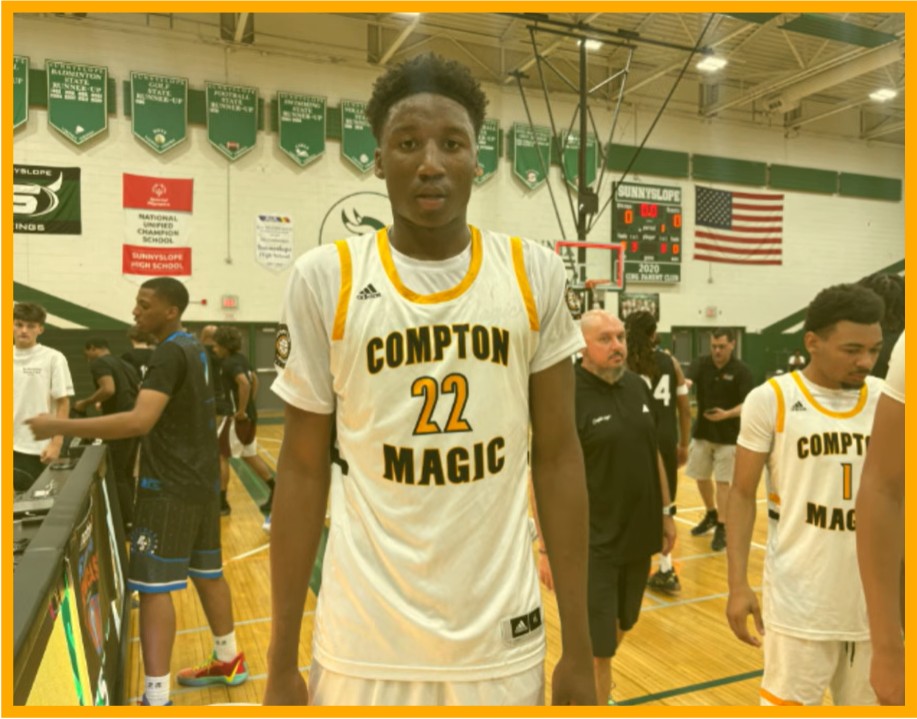
Yann Kamagate: The Next Wemby? Why This 7-Footer Is the NBA’s Future
Who Is Yann Kamagate?
In a basketball landscape that is constantly chasing the next generational big man, a 16-year-old from Burkina Faso is making the kind of noise that forces scouts to put their phones down and pay attention. Yann Kamagate, a 7-foot-1, 230-pound center in the high school class of 2028, has rocketed from relative obscurity to must-watch status in the span of a single spring. Listed on 247Sports as a top-tier prospect, Kamagate currently plays for the Compton Magic on the Adidas 3SSB circuit after spending the school year at Darrow School in upstate New York, where he was ineligible to play but spent months sharpening his game behind the scenes.
Born in Burkina Faso and raised in La Canada Flintridge, California, Kamagate’s background mirrors the increasingly global pipeline of talent that has reshaped the NBA over the past decade. His journey from West Africa to California to the elite prep school circuit of New England reflects the kind of cosmopolitan basketball upbringing that has produced stars like Joel Embiid, Pascal Siakam, and, of course, Victor Wembanyama.
The Physical Tools That Have Scouts Buzzing
The first thing anyone notices about Kamagate is the sheer absurdity of his physical profile. At 7-1 with a wiry, long-armed frame built to carry significantly more weight, he moves like a player four inches shorter. NBA Draft Room describes him as “a ridiculous athlete for a 7-footer with awesome movement skills and elite tools,” while noting that he “shows immense upside” as he puts it all together on the court.
Kamagate’s Standout Physical Traits
- Height & length: 7-1 with an enormous wingspan that allows him to contest shots without leaving his feet
- Rim-to-rim speed: Runs the floor like a track athlete, converting transition opportunities at an elite clip
- Lob threat: Already a finishing machine above the rim, catching and converting in traffic
- Shot-blocking instincts: Natural timing and awareness as a rim protector with the tools to become a dominant presence
What separates Kamagate from other oversized teenagers is his fluidity. Many 7-footers at his age are stiff, lumber through possessions, and rely entirely on their height advantage. Kamagate glides. His movement patterns suggest a player whose coordination and body control could scale dramatically as he matures physically. The New England Prep Basketball scouting network calls him “one of the most intriguing young bigs in New England,” emphasizing his elite size, length, and the fact that he already “makes his presence felt as a dominant shot blocker and rim protector.”
The Wembanyama Comparison
Comparing any teenager to Victor Wembanyama is dangerous. Wembanyama is, as many analysts have argued, a player without a true historical precedent — a 7-4 unicorn who can handle, shoot, pass, and defend at an unprecedented level for his size. But the comparison to Kamagate is not about suggesting they are the same player. It is about recognizing a shared archetype: the hyper-mobile, freakishly long big man from a French-speaking African or European country who processes the game differently than traditional centers.
Where Kamagate Echoes Wembanyama
- Defensive versatility: Both possess the length and foot speed to guard multiple positions, altering the geometry of a defense simply by being on the floor
- Transition dominance: Like a young Wemby in France, Kamagate is at his most devastating in the open floor, where his stride length and coordination create easy buckets
- Developmental arc: Wembanyama was raw offensively at 16, too — the perimeter game and passing vision came later. Kamagate is on a similar trajectory
- Global pathway: Both followed the increasingly common route of African and European-born talent developing through elite basketball ecosystems outside the NBA’s traditional American pipeline
As Ballislife reported after the Pangos Spring Showcase, Kamagate was the player who helped himself the most at the event, putting “a hurting on the rim” with tough finishes and a surprisingly developed skill set. After sitting out his sophomore campaign, the work he put in during the year was evident. USC and Nebraska offered scholarships immediately after the event.
Offensive Upside: Still Scratching the Surface
This is where the honest caveats come in. Kamagate is still very much a work in progress on the offensive end. His scoring currently lives around the basket — lobs, putbacks, dunks in transition, and occasionally some tough finishes in traffic. There is no reliable jumper yet, no consistent face-up game, no playmaking from the high post. NBA Draft Room is straightforward about this, noting that while he is “still a work in progress on the offensive end,” he has “plenty of upside to grow into.”
But here is the thing: at 16, that is not a weakness — it is a feature. The best big-man prospects in the modern NBA were not polished scorers as sophomores in high school. What matters at this stage is whether the physical foundation and motor are there, and whether the player shows the kind of coordination and feel that suggests skill development will come. Kamagate checks every one of those boxes. His most recent Adidas 3SSB performance — 16 points and 19 rebounds with 2 blocks against Garner Road — showed a player who dominates the glass and competes relentlessly, even before the skill refinement arrives.
The Recruiting Explosion
The spring of 2026 has been a turning point for Kamagate’s recruitment. After the Pangos Showcase and his early 3SSB performances, the offers have cascaded in from the country’s best programs. According to Keeping It Heel, UNC’s Michael Malone made Kamagate his very first offer in the 2028 recruiting class. Kansas, Baylor, UCLA, USC, Houston, Texas A&M, Arizona, and Creighton have all extended offers as well.
Schools That Have Offered Kamagate
- North Carolina, Kansas, Baylor, UCLA
- USC, Houston, Texas A&M, Arizona
- Creighton, Nebraska, Washington, and more
247Sports scouts have indicated that Kamagate has “a good chance” of entering the rankings as a five-star prospect when the 2028 class is next updated. For a player who was unranked just weeks ago, that kind of trajectory is exceptional. It speaks to the volatility of high school recruiting, but it also speaks to a player whose talent is simply too obvious to ignore once you see it live.
NBA Timeline: When Could He Arrive?
Kamagate is a member of the high school class of 2028, which means the earliest he would be eligible for the NBA Draft is 2029, though 2030 remains a strong possibility depending on whether he reclassifies or spends one year in college. NBA Draft Room projects him as a first-round pick in either the 2029 or 2030 draft, currently ranking him as the third-best center in his draft cycle behind Bamba Touray and Eric Dampier Jr.
That timeline matters because it means Kamagate still has three or four years of development ahead of him. At the rate he is improving — going from unknown to five-star caliber in a single offseason — the ceiling is genuinely staggering. If he can add a face-up game, develop even a mid-range jumper, and continue to refine his defensive instincts, the Wembanyama comparisons will only intensify.
The Verdict
No one is saying Yann Kamagate is Victor Wembanyama. That comparison may ultimately be unfair to both players. But what Kamagate represents is the continued evolution of the modern big man — a player who combines African roots, elite physical tools, and a developmental path through American prep basketball to become something the league has not quite seen before. He is 16 years old. He is 7-1. He runs like a guard. He blocks shots like a dream. And the best basketball programs in America are already fighting for him.
The question is not whether Kamagate will make it to the NBA. The question is how high his ceiling goes. If the last few weeks are any indication, we have barely begun to find out.